In a world first, a British university has created a Professorship of the Unknown.
Situated in the Science and Engineering Faculty of Redhill University, the purpose of the professorship will be to “advance mankind’s understanding of the Unknowns and the Unknowable,” according to the university’s press release.
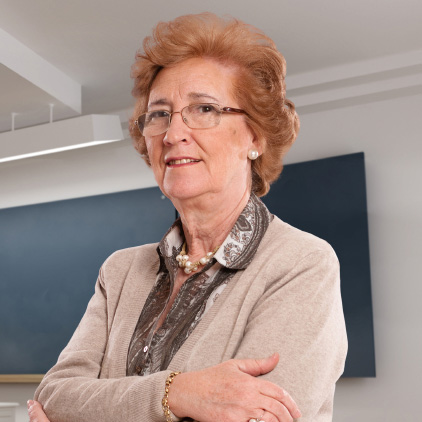
The Dean of Redhill University announced, “I congratulate Professor Barbara Doubtless on her appointment as Professor of the Unknowns”. She comes to us with a formidable reputation for challenging the scientific community, which I know she will continue to do in her new role.
“It is a world leading initiative and I expect other top tier universities in developed economies to follow suit,” continued the Dean of Redhill University.
Struggling to understand the focus of Professors Doubtless’s work and with the uneasy feeling that here is another academic making a living doing nothing useful or relevant, I requested an interview with the professor. I was lucky enough on behalf of HumanObservatory.com to be the only journalist to be granted time with the professor.
I interviewed on her first day in office.
Human Observatory: Congratulations on your exciting new role. How did the science of the Unknowns come about?
Professor Doubtless: The thing that really kick-started this research was Donald Rumsfeld’s reference in 2002 during the Iraqi war to what he described as “Unknown Unknowns”.
There was a large body in the academic community that felt if there were really unknowns that we did not know about, then it required significant research so that we know more about these Unknowns. Out of this enquiry came the science of the Unknowns.
HO: Surely given the advance of science, there is not much that is unknown?
Prof D: You might think so. An intelligent person, including many scientists, puts three great discoveries together and wrongly believes they explain our universe. The three elements are:
- The Big Bang setting out how the universe came into existence to form a series of suns and planets.
- Atomic and molecular structures describing how everything is made up of neutrons, protons and electrons that connect together to form the molecules of all our materials
- Evolution describes how these molecules formed together into ever more complex living things to create the plant and animal kingdoms.Sitting at the apex of all living things is us humans.
Those three theories might seem on the surface to be all that we need to know to explain the world. In this view, people are a bunch of evolved molecules with a self-determined future on planet earth gently orbiting in its place in the universe. Everything explained: QED.
HO: Like I said, our scientists seem to know an awful lot ….
Prof D: Actually scientific confidence peaked in the 1950s as promise of quantum physics started to get bogged down in ever more complex maths.
Now after decades of awkward findings in science and ever more abstract explanations by scientists, it is time to call it as it is: we understand very little about anything and what little we do understand has huge gaps in explaining our world. In fact the maths is getting so complex that scientists are in danger of disappearing up their own black hole.
Not only are their huge Unknowns, but there are things that as humans on earth, we can never expect to understand or explain. These are the Unknowables.
HO: Interesting assertion professor, but give me some examples
Prof D: “Let’s start with the universe as example 1. Scientists admit that they can only describe 6% of the mass in the universe with such things as stars, planets, gases and other matter. The other 94% is made up of ‘Dark Matter’ and the even more abstract ‘Dark Energy’. At the leading edge of science, our brightest are putting up theories but really we are no closer to understanding these elements. Plus what else is there beyond the 94% that we haven’t even be able to measure.
HO: Cool …
Prof D: Example 2, once it was clear that electrons, protons and neutrons weren’t the base building blocks of atoms and ultimately everything, it seemed that there would be another level of smaller items such as neutrinos, photons and the celebrated Higgs Buson that would simply be a bunch of smaller items that make up the bigger (but still very small) stuff.
Then came along quantum physics with bizarre things like the Heisenberg’s Uncertainty Principle that loosely states that a particle is one thing when you are looking at it and can change to something else when you are not.
The most commonly accepted theory for matter now rests with string theory which has it that the basic building blocks of matter are a series of gently vibrating strings that interact to form everything else. To make the maths work we need to think of these as operating in 10 or even 26 dimensions. Not just the four you and I understand of space and time, but many more. Excuse me, what are these additional dimensions?
HO: I am beginning to understand. Any more examples ….
Prof D: Example 3, the human brain and human consciousness. Popular science articles have it that the brain is a series of interconnected nerve cells organized into regions of the brain which dictate our behaviour. Our CAT scans can show parts of the brain operating and “lighting up like Christmas Trees” when they switch on and switch off. Surely we are only a few years from understanding every connection and can explain fully how the brain works.
And human consciousness? Here the scientists start blushing and start referring you to the Philosophy department. How desperate is that?
In all three areas, let’s also remember that these scientists are operating at a level so much ahead of the rest of us, talking in advanced mathematics and using tech instruments that only a few other people on earth can even pretend to engage with them.
I mean how do we know that these people are even sane? As they look to each other for validation, that is another great Unknowable.


